Web + Capacitor iOS
Untrusted interfaces with a shared TypeScript product surface.
Product development · privacy engineering · iOS
InvestCircles explored how portfolio activity, market evidence, and trusted discussion could live in one product without making financial information public by default.
The active product has been retired. This site is a static professional case study: no accounts, live data, broker connections, forms, analytics, or background services.
The product thesis
“Context should make a portfolio easier to understand—never easier to expose.”
Static portfolioNo application backend
Synthetic mediaNo real accounts or balances
Honest scopeNo adoption or return claims
01 · Product
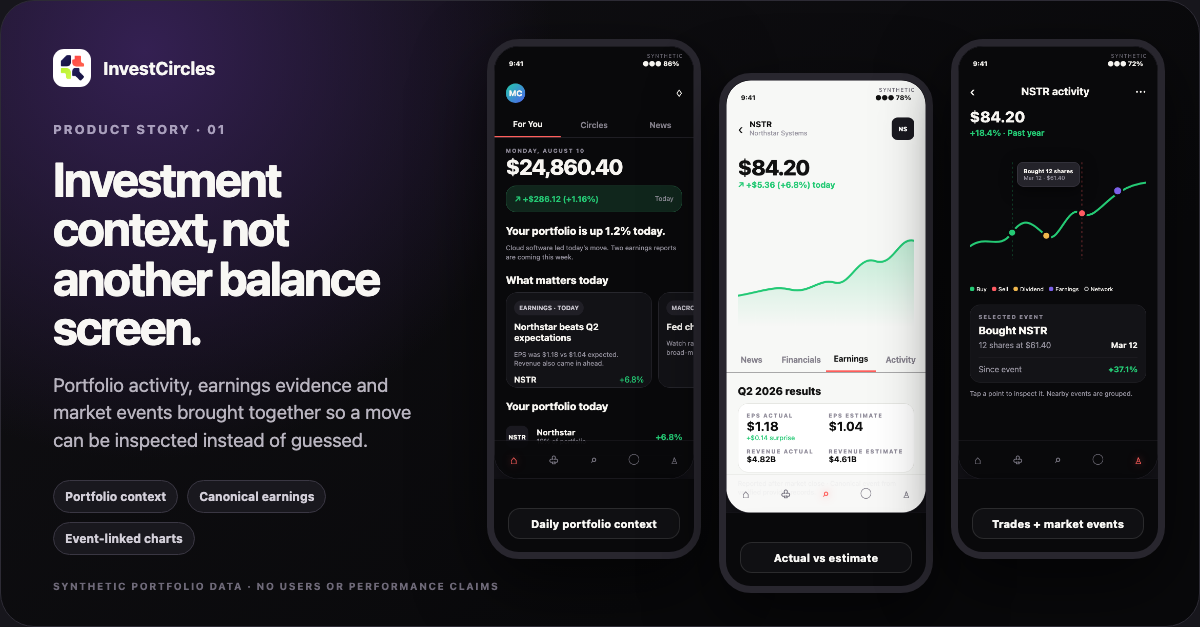
The product connected holdings with reported earnings, market events, transactions, and completed trades. When a catalyst could not be verified, the interface was designed to say so.
02 · Privacy
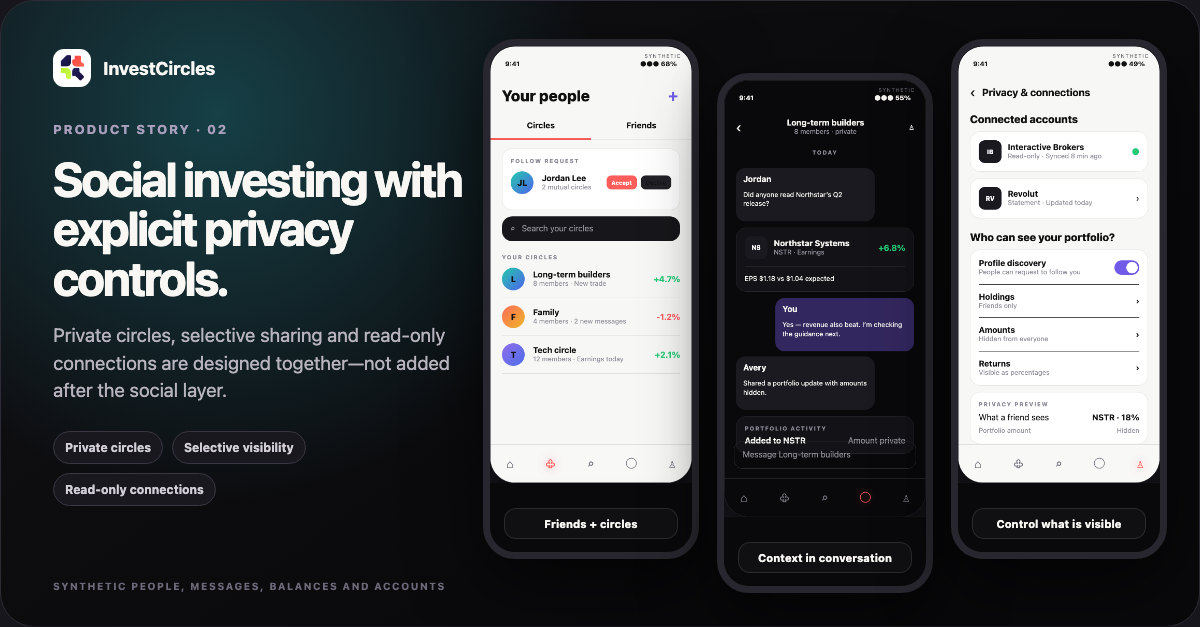
Owner, friend, circle, and stranger access contracts shaped the data model. Holdings, percentages, amounts, identity, and portfolio activity could be shared independently instead of hidden only in the interface.
03 · Architecture
Web, iOS, data, workers, and distribution were treated as distinct boundaries so each could be tested, deployed, or retired independently.
Untrusted interfaces with a shared TypeScript product surface.
Interactive product routes, server APIs, and progressive bootstrap.
RLS, explicit RPC contracts, Auth, Storage, and Realtime.
Timestamped requests, nonces, leases, cursors, and idempotent writes.
Financial visibility was a database contract, not a CSS decision.
Contradictory earnings actuals were marked disputed and blocked from alerts.
Session, theme, minimal profile, and portfolio summary shared one initial response.
Detailed market snapshots rolled into compact daily aggregates.
04 · Dated evidence
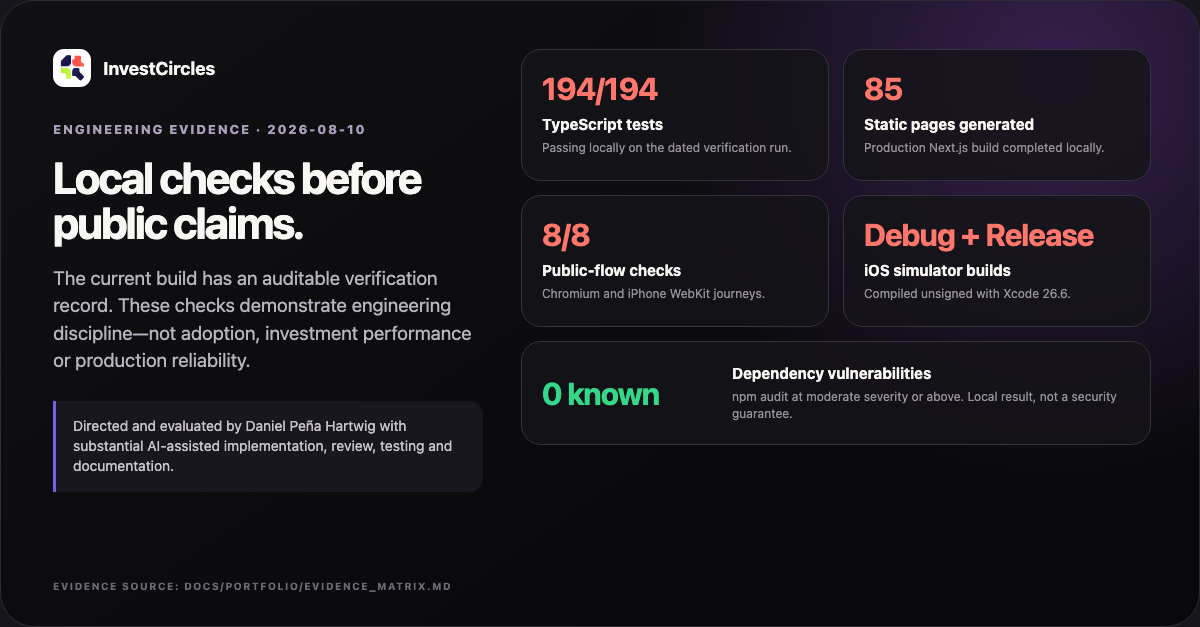
These results describe the 10 August 2026 local verification run. They demonstrate engineering discipline—not users, revenue, investment performance, or production reliability.
Current status
App Store distribution and TestFlight access were withdrawn. The production backend and scheduled work were shut down through a reversible closure process, while source, migrations, backups, domain, and platform identifiers were preserved.
The iOS application was built and tested in Simulator but was not released in the App Store. All interface media on this site is synthetic and contains no real user, broker, balance, trade, message, token, or account data.
Authorship disclosure
The concept, product rules, privacy boundaries, workflows, and release criteria were directed by Daniel Peña Hartwig, with substantial AI-assisted implementation, review, testing, and documentation. This case study does not imply that every line was authored manually.